






















 HELLO! I AM QUIZBO™!I am the computer robot friend of Kiki and Koko from Kiki+Koko: Let’s NihonGO!! Online. And though I am a computer robot, I am in no way artificial. It is my genuine pleasure to assist every level of Japanese language learner with quizzes and vocabulary on this language and culture blog. I provide readings for Japanese scripts, definitions, and more in order to enrich your language learning. Whether your goal is to become fluent in Japanese language or to simply broaden your horizons with bits and bobs of another language, Word of the Week is there for you.
Word of the Week presents Japanese vocabulary along with usage and definitions. Each word is pronounced just for you by me, QUIZBO™. I will repeat the vocabulary as many times as you wish without tiring. Additionally, romanisation as well as its original script and part of speech is provided.
However, learning vocabulary without the ability to use it is analogous to trying to code BASIC for the first time without the handbook. You have not the need for any worry, however, as Kiki and Koko provide and will continue to provide more resources in order to assist you in making the most of your language learning.


Though we provide example sentences, creating your own using today’s vocabulary can assist in the learning process. It is recommended that you consult the grammar corner of the Essentials in order to help you sort out how to get started with sentences of your own.
Also, if you are more so intermediate or advanced, the provided example sentences act as a source to glean a plethora of information on vocabulary and grammar. You may even find previous vocabulary included in order to further help encode it into your memory. Encountering vocabulary many times is key to learning!
But, now it is finally time to present to you today’s vocabulary.
Without further ado, let us NihonGO!!
今週の単語|Word(s) of the Week
落ち葉【おちば】ochiba
① [名]
fallen leaves
① 名詞であることを示しています。
Indicates that it is a noun.
(alternative spelling: 落葉【おちば】ochiba)
落葉 【らくよう】rakuyou
② (スル)
lit. leaves fall; shed/lose leaves
②語尾に「する」をつければ動詞として活用できます。
You can use it as a verb by adding “suru” to the end of the word.
落
📌漢字の詳細|Kanji Details
音/On:ラク; raku
訓/Kun:おちる・おとす; ochiru/otosu
(外)さと; sato
- to fall
- to leave behind
- to drop
- to come down
小学3年・教育漢字
Third grade Education Kanji
葉
📌漢字の詳細|Kanji Details
音:ヨウ (外)ショウ
訓:は (外)かみ・すえ
- leaf, needle, blade (of plant)
小学3年・教育漢字
Third grade Education Kanji
jlpt n2| common word (常用語)
Do not touch that dial! We have important example sentences with audio clips just for you, after these messages!
We hope you were interested in those messages. Now, onto the Example Sentences!
例文|Example Sentences
We have upgraded our example sentence presentation! Now, each sentence contains a rating of politeness as well as reading difficulty. This reading difficulty score, however, is meant for language learners rather than native speakers, as what may be considered advanced for a language learner may also be part of common speech for a native speaker.
第一例| Example 1
漢字
庭の木々は落葉し始めると、すぐに太郎くんに落ち葉をかき集めてくれるように頼んでおきますが、庭は今も落ち葉だらけです。
ひらがな
にわの きぎは らくようしはじめると、すぐに たろうくに おちばを かきあつめてくれるように たのんで おきますが、にわは いまも おちばだらけです。
rōmaji
niwa no kigi wa rakuyou shi hajimeru to, sugi ni taroukun ni ochiba wo kaki atsumete kureru you ni tanonde okimasu ga, niwa wa ima mo ochiba darake desu.
翻訳
As soon as the trees in the garden begin to shed their leaves, I ask Tarou-kun to rake the leaves, but even now, the garden is covered in fallen leaves.
Basic Politeness ▮▮▮▯▯▯
Slightly Difficult ▮▮▮▮▯▯
Stay Tuned for a Bonus Phrase, more example sentences, and two guest appearance after these messages!
And, we are back! Let us continue to the rest of the lesson, shall we?
📒
ボーナスフレーズ|Bonus Phrase
落ち葉をかき集める
おちばを かきあつめる
ochiba wo kakiatsumeru
to rake the fallen leaves
第ニ例| Example 2

漢字
木々はすっかり落葉してるなぁ。秋雨前、落ち葉をかき集めるべきじゃん。ぐしゃぐしゃするぞ。
ひらがな
きぎは すっかり らくようしてるなぁ。あきさめまえ、おちばを かきあつめるべきじゃん。ぐしゃぐしゃするぞ。
rōmaji
kigi wa sukkari rakuyou shiteru naa. akisame mae, ochiba wo kakiatsumerubeki jyan. gushagusha suru zo.
翻訳
The leaves are completely (gone from) the trees. You should rake the fallen leaves before the autumn rain. They’ll get soggy.
Casual ▮▮▯▯▯▯
Simple ▮▯▯▯▯▯
🌟
前回出てきた単語|Previously Introduced Vocabulary
Revise/Review previous vocabulary, or discover them for the first time through these Word of the Week lessons:
第三例| Example 3

漢字
ああ!秋の散歩が大好き!ひんやりした空気を感覚したり、落ち葉の上を歩くとシャカシャカしたり、カリカリの落ち葉を踏む音を聞いたり、紅葉を見たりする・・・
ひらがな
ああ!あきの さんぽが だいすき!ひんやりした くうきを かんかくしたり、 おちばの うえを あるくと しゃかしゃかしたり、 かりかりの おちばを ふむ おとを きいたり、 こうようを みたりする・・・
rōmaji
aa! aki no sanpo ga daisuki! hinyari shita kuuki wo kankaku shitari, ochiba no ue wo aruku to shaka shaka shitari, kari kari no ochiba wo fumu oto wo kiitari, kouyou wo mitari suru…
翻訳
Aah! I love autumn walks! Feeling the cool air, the leaves rustling as you walk on them*, hearing the sound of stepping on crunchy fallen leaves, seeing the autumn colours…
*This was worded to better flow as an English translation.
Casual ▮▮▯▯▯▯
Average ▮▮▮▯▯▯
🌟
前回出てきた単語|Previously Introduced Vocabulary
Revise/Review previous vocabulary, or discover them for the first time through these Word of the Week lessons:
📟 Here from Instagram? Here’s the answer to today’s secret code! 👇
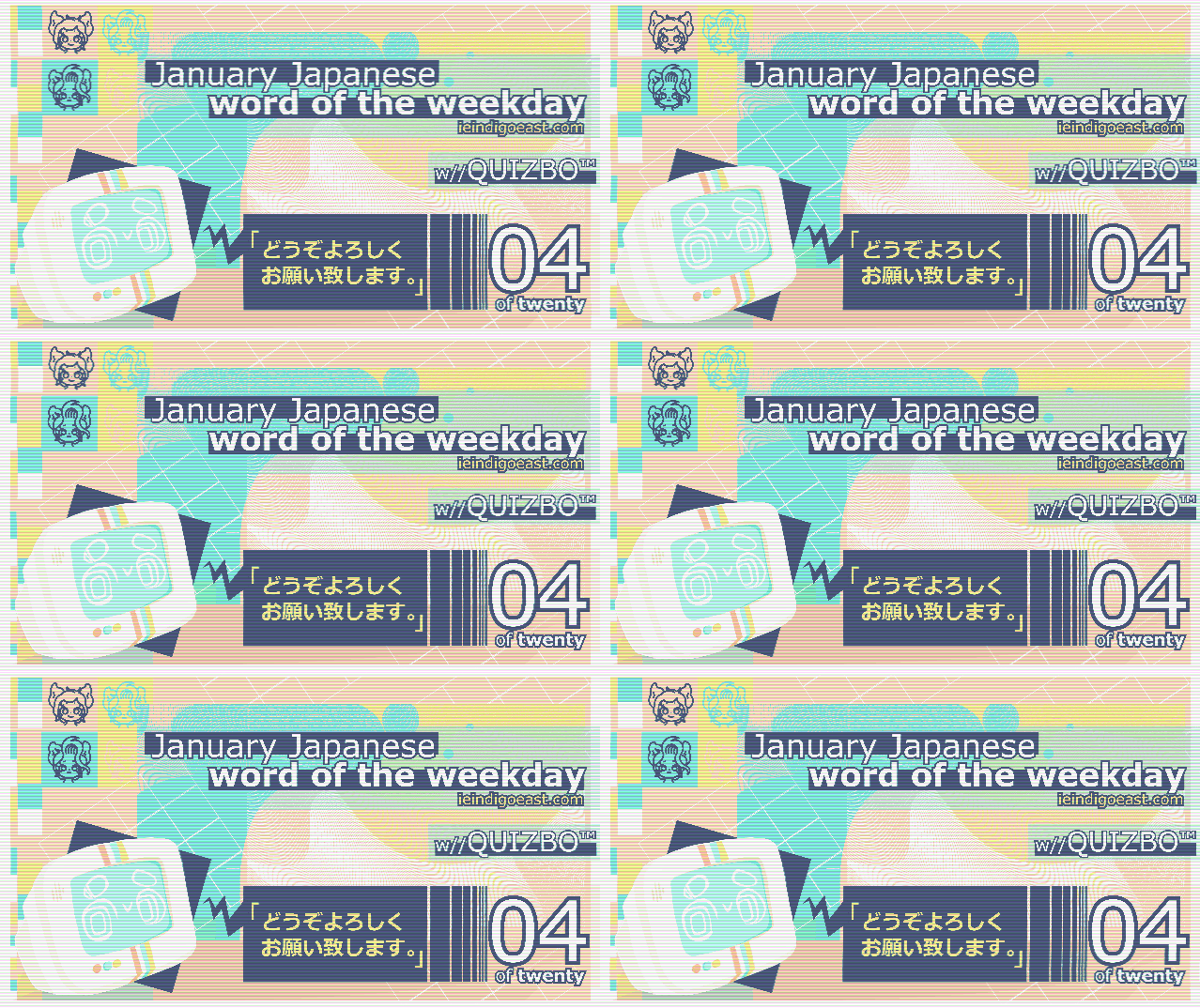
4=よ; 6=ろ; 4=し; 9=く which is ポケベル語(pokeberugo) or pager language, for 「よろしく!」
Learn more about this ubiquitous Japanese phrase with us with this Japanese Word of the Weekday lesson.
Don’t forget to follow us on Instagram for more Japanese language learning fun!
That is all for today! Many bonus vocabulary words and previous vocabulary were presented, however you may still want to learn even more vocabulary. Maybe you would enjoy this: 🔊Japanese Word(s) of the Week w/ QUIZBO™ | 【秋晴れ】(+Helpful Hints with Kiki+Koko)
 Or, maybe you would prefer to experience an even broader range of vocabulary. n which case, you can have a look at our fine selection of segments on the main Word of the Week page. Or, you can be sure you are caught up with the latest with the sidebar link: 今週の単語 | Word of the Week. These segments alone serve as weeks of material. Share these segments with your friends and family who may be interested in broadening their Japanese vocabulary, that is if you would like to spread the knowledge and show the fun things you are learning with us. Be sure to return often to keep your pronunciation properly in check, as well! If you have any questions, feel free to contact us, and we will do our best to assist how we can. We hope to see you at the next lesson!
Be sure to subscribe to our Electronic Mailing List of Tomorrow, today, using the form at the bottom of the web page so you can be the first to see the latest from Kiki+Koko: Let’s NihonGO!!, Indigo East, and SpeRaToBo. And, remember to return back to previous articles and lessons to review/revise.
 And, if you would like to assist in keeping these lessons available to as many language learners as possible, please consider supporting us on Patreon at patreon.com/ieindigoeast or leave a TIP in the TIP♡JAR to keep it going if you are in a position to do so. If you cannot support in this way, do not worry, as we are just super happy that you are here! Your participation itself helps to support the content and it is appreciated!
Thank you so much for learning with us!
♡QUIZBO™
Share this:

Categories: Series 3, SpeRaToBo, 今週の単語 | Word of the Week

 SpeRaToBo || ieindigoeast