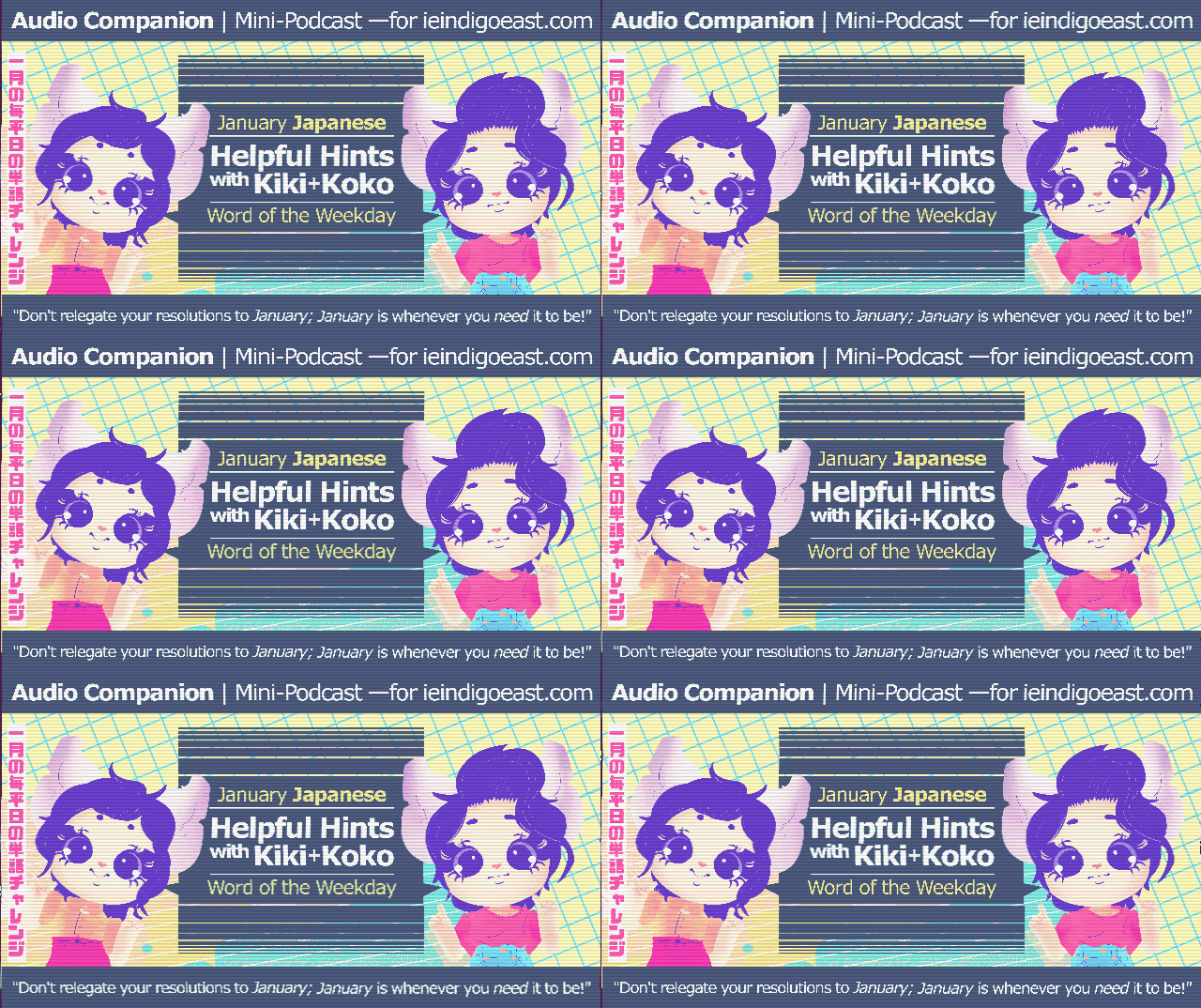
HELLO! I AM QUIZBO™!Welcome to Kiki+Koko: Let’s NihonGO!! Online’s Word of the Week! This is the part of the week where I will provide for you a new word in Japanese. However, it is helpful to human memory to also hear new words used in a sentence. This will also clarify a few different usages that may become more clear with more grammar lessons, but is still important to be introduced.
It is useful to be able to experience a quick segment in the middle of the week that will enrich your vocabulary. But, also use this as a reminder to go back and review previous lessons! Human memory can be fallible, so this is a good opportunity to double-check the facts you may have hopefully been sharing with your friends, family, animal companion, or artificial intelligence device.
Feel free to repeat the word aloud! And, if you need to hear it once, twice, thrice, or more, I am here to repeat it aloud for you!
Also, I am joined by Kiki and Koko, this time. I am glad that they supported the creation of this segment and will continue to allow me to use this forum. Though, I suppose there was nothing to worry about. Let’s continue!
Word(s) of the Week:
頑張る【がんばる】 ganbaru Verb, Intransitive, Godan 1. To do one’s best 2. To persevere 3. To keep at it (and more※)
※Quick Culture Corner with Kiki+Koko:
こんにちにゃあ!This is Kiki+Koko! We’re here for a very quick culture corner note. Whilst the word 「頑張る」 is used often in everyday conversation, it is also a very Japanese word culturally. That is to say, it has a deep rooted feeling. If you’re English, you might have the deeply rooted concept of 「Keep Calm and Carry On」ingrained subconsciously and realise how it holds its own cultural significance.
In a different way, 「頑張る」serves as a word that has persisted in the everyday, but also in times of tragedy and disaster, joining one another in standing firm, gritting their teeth, and getting through the tough times together as one no matter how difficult. It’s persisted as a ubiquitous word to Japanese culture. Through tragedy, it’s the fighting spirit that drives everyone, to endure, to hang on, to stand firm, to survive.「頑張りましょう」, ganbarimashou.
♡Kiki+Koko
Example Sentences:
The first row is in Japanese with Kanji. The Next row is in hiragana, then romanised using rōmaji with the final row translated into English. (Japanese→Hiragana→Rōmaji→English)
Example #1:
平仮名を 全部覚えるに 頑張りますよ!
ひらがなを ぜんぶ おぼえるに がんばりますよ!
hiragana wo zenbu oboeru ni ganbarimasu yo!
I will do my best to learn all the hiragana!
Example #2:
この惑星はちょっと慣れづらいだが、頑張るわ。
この わくせいは ちょっと なれづらいだが、 がんばるわ。
kono wakusei wa chotto naredzurai daga, ganbaru wa.
This planet is a little hard to get used to, but I’ll do my best.
Example #3:
スポンジ太郎くんは取って頑張ったのに, まだ免許を取れなかった!
すぽんじたろうくんは とって がんばったのに、 まだ めんきょを とれなかった!
Suponoji-tarou-kun wa totte ganbatta noni, mada menkyo wo torenakatta!
Even though Sponge-Tarou-kun tried his best to get it, he still hasn’t gotten his licence!
Example #4:
積極的な態度を取るようにして頑張ってね!あなたを応援するよ!
せっきょくてきな たいどを とるように して がんばってね! あなたを おうえんするよ!
Sekkyokutekina taido wo toru you ni shite ganbatte ne! Anata wo ouen suru yo!
Do your best to keep a positive attitude! We’ll cheer you on!
Be sure to subscribe to our Electronic Mailing List of Tomorrow, today, using the form at the bottom of the web page so you can be the first to see the latest from Kiki+Koko: Let’s NihonGO!!, Indigo East, and SpeRaToBo.
Also consider following our new page on Twitterto support the spread of this site in a friendly domination of Earth that will help more people. We all understand if you do not have a Twitter account, as well. We are just super happy that you are here! It is appreciated!
📢ieindigoeast.com now uses affiliate links! This means that if you purchase a product or service using our link, we may earn a commission that helps us create new and even better content! (All at no extra cost to you!) You can read our full disclosure here.














 HELLO! I AM QUIZBO™!Welcome to Kiki+Koko: Let’s NihonGO!! Online’s Word of the Week! This is the part of the week where I will provide for you a new word in Japanese. However, it is helpful to human memory to also hear new words used in a sentence. This will also clarify a few different usages that may become more clear with more grammar lessons, but is still important to be introduced.
 こんにちにゃあ!This is Kiki+Koko! We’re here for a very quick culture corner note. Whilst the word 「頑張る」 is used often in everyday conversation, it is also a very Japanese word culturally. That is to say, it has a deep rooted feeling. If you’re English, you might have the deeply rooted concept of 「Keep Calm and Carry On」ingrained subconsciously and realise how it holds its own cultural significance.


 SpeRaToBo || ieindigoeast
11 replies »